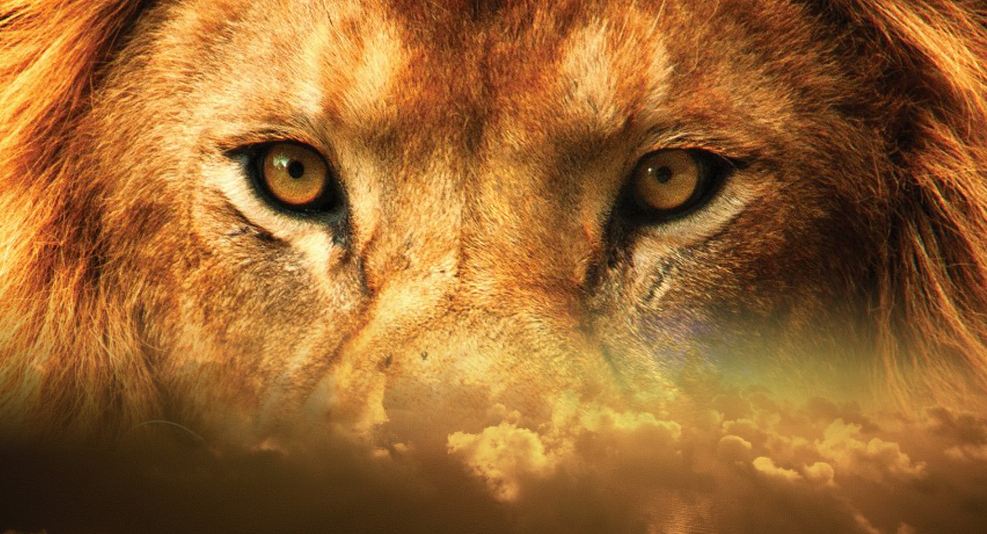
The longing for Aslan is really an echo of a deeper yearning as God’s image bearers that only Christ can fulfill. Like may others, I’m responding to Greta’s Gerwig’s choice to have actress Meryl Streep provide the voice for Aslan, the Christ figure in C. S. Lewis’ The Chronicles of Narnia; specifically, Netflix’s The Magician’s Nephew.
Note that Streep voiced a male character in the movie Angels in America.
Gerwig’s grotesque Aslan
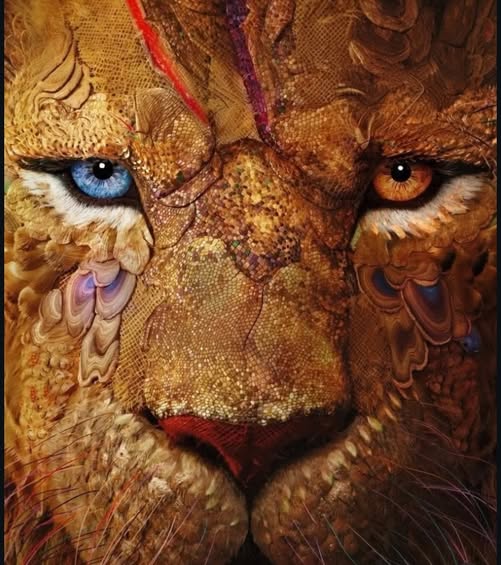
I sympathize with a sentiment expressed by someone on social media comparing Gerwig’s Aslan with the demon Tash’s feathers and scales. In Aslana: Queering the King, Annie Crawford observed,
Aslan has “heterochromatic eyes” inspired by David Bowie, feathered eyes, dragon-like skin, a lipstick red nose, and rainbow whiskers. Everything about Gerwig’s visualization of Aslan speaks to breaking the gender binary and the celebration of transgressive identities.
Some personal background
In order to get a glimpse of how I feel about Narnia, I must return to when I was three years old, when my mother first taught me to pray. She pointed to a corner of the ceiling where three lines went to a point and gave me her simple discourse on the Trinity. “Padre, Figlio, e Spirito Santo, uno Dio” she said. In English: Father, Son and Holy Spirit, One God. Later on, my parents sent me to a Catholic school where the nuns inducted me into religious studies.
After that I ended up in a large secular college. It was a grim challenging place where school yard fights regularly broke out and the teachers were indifferent; a cultural shock for me. That world had no use for God or Christ – its library contained dry books, especially on science and evolution.
Then I came across a book with a catchy title: The Magician’s Nephew; a book containing obvious Christian themes. Then, reading The Lion, the Witch, and the Wardrobe, confirmed for me that Aslan was a Christ figure. Not only did it depict a Sacrifice on behalf of a sinner, but also a Resurrection. By the end of The Voyage of the Dawn Treader, Aslan tells Edmund and Lucy that they can’t return to Narnia as they are too old; that he has another name in their world and that they must learn to know him by that name.
All this to say; this incremental discovery gave me joy. Don’t let anyone who supports Gerwig’s interpretation of Aslan as optional tell you otherwise.
The true Aslan
I’ll let Crawford chime in once more. From a post on X (formerly Twitter) she rightly observes,
C.S. Lewis explicitly said that Aslan was not an analogy or allegory or symbol but a “supposal”.
Suppose the Second Person of the Trinity were incarnate in a different world? What would that story be like. This is crucial – Aslan is to be treated as an imaginative supposal of Christ. He isn’t just a character in a story.
Of course Narnia is not a sacred text, but Aslan is a sacred idea and ought to be treated as such.
Finally, the Narnian Chronicles are deeply Christian. Sadly, I am inclined to believe that Gerwig’s version of Aslan is a deliberate attempt to subvert its message and promulgate a worldly one.
The Longing for Aslan is our longing for the True Christ. Don’t let anyone take that joy from you.
Maranatha!
Further reading
Living Like a Narnian (Joe Rigney)
Sharing is caring!